
DevSecOps Integration in CI/CD Pipelines: Automating Security Testing Across the Full-Stack Lifecycle

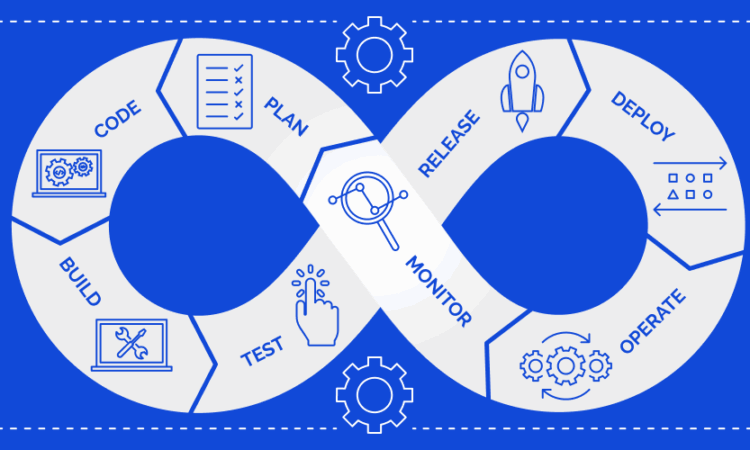
In software development, speed often takes centre stage — but speed without security is like driving a race car without brakes. You might win the race once, but you won’t survive the next corner. That’s where DevSecOps steps in — ensuring that every sprint, build, and deployment is not only fast but also safe.
By embedding security testing directly into Continuous Integration and Continuous Deployment (CI/CD) pipelines, teams can shift from reactive patching to proactive protection. The goal is simple: make security everyone’s responsibility without slowing down innovation.
Building Security into the Flow
Traditional security methods were like castle walls — high, strong, but built too late. In the fast-moving world of agile development, that model doesn’t work anymore. DevSecOps changes the narrative by integrating security from the very beginning of the development process.
Instead of security being an afterthought, it becomes a natural part of the flow. Static Application Security Testing (SAST) tools check code as developers write it, catching vulnerabilities early. Meanwhile, Dynamic Application Security Testing (DAST) tools analyse running applications in real time, uncovering issues before they reach production.
Those pursuing a full stack developer course in Pune are now discovering how these automated checks ensure that developers don’t have to choose between speed and safety. The integration creates a development rhythm where every push and pull request undergoes continuous evaluation — without halting progress.
Vulnerability Scanning: The Gatekeeper of Trust
Imagine a busy airport with thousands of passengers moving every hour. Security scanners ensure that nothing harmful passes through, yet the process remains seamless. Vulnerability scanners serve the same purpose in a CI/CD pipeline.
Automated scanners continuously inspect libraries, dependencies, and containers to detect outdated or vulnerable components. They flag issues long before attackers can exploit them. With the growing popularity of open-source tools, these scans have become vital to maintaining trust across the software supply chain.
Developers are no longer gatekeepers but collaborators with security systems that learn and adapt. By automating scans, teams ensure consistency and reduce human error — strengthening defences without creating bottlenecks.
Security as Code: Embedding Protection in Every Layer
The philosophy of “Security as Code” brings security policies into version control, treating them as integral parts of the codebase. This approach enables infrastructure to be configured with built-in rules — from access permissions to encryption policies — that can be tested, deployed, and updated like any other code.
For example, automated scripts can verify that containers don’t run as root or that cloud resources are encrypted. These policies evolve alongside the application itself, reducing manual oversight and increasing transparency.
In full stack developer course in Pune, learners often simulate this concept by integrating security configurations into deployment files — ensuring that from front-end to back-end, each layer follows the same secure-by-design principles.
Continuous Feedback and Collaboration
DevSecOps isn’t just about automation — it’s about collaboration. Security teams, developers, and operations professionals work together, sharing a unified goal: delivering secure software quickly.
Continuous feedback loops ensure that every team understands where vulnerabilities exist and how to fix them efficiently. Dashboards and alert systems keep all stakeholders informed in real time, transforming what was once an isolated task into a shared responsibility.
This alignment doesn’t just make applications safer — it builds a culture of awareness and accountability. Security becomes a shared language across departments, encouraging innovation with confidence.
Conclusion
The integration of security within CI/CD pipelines marks a fundamental shift in software development — from security as a final checkpoint to security as a continuous practice. Through SAST, DAST, and automated vulnerability scanning, teams can identify risks early, fix them faster, and deploy confidently.
DevSecOps doesn’t just protect applications; it empowers teams to deliver quality software without compromise. By embracing automation, collaboration, and Security as Code, developers ensure that innovation moves forward on a foundation of trust.
In today’s landscape, mastering these principles is not optional — it’s essential. For aspiring professionals, understanding the connection between secure coding and continuous deployment opens the door to a career that balances speed, precision, and resilience.