
Develop Science Mastery With Interactive Lessons Designed To Maximize Long-Term Retention

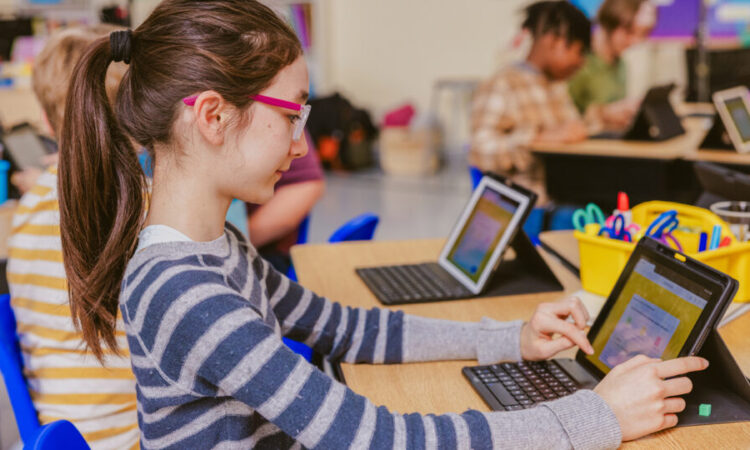
Mastery of science calls for a profound awareness of ideas and the ability to apply information in several circumstances, not only memorizing facts. The necessity of creative learning approaches becomes crucial as students confront ever more difficult scientific subjects. Many parents seek psle science tuition to give their kids organized, efficient help that promotes retention and understanding. Interactive learning has been shown to be a remarkable method for enabling students not only to understand but also to remember scientific knowledge over time.
Engaging Students Through Interaction
Interactive lessons inspire students’ innate curiosity, therefore transforming learning from a boring to an engaging process. Students engage actively through debates, experiments, tests, and real-world problem-solving situations rather than merely absorbing knowledge. This practical method increases cognitive involvement, so improving retention and comprehension. A pupil absorbs the content more thoroughly in their long-term memory the more times they engage with it. By providing several views of abstract ideas, visual aids, including diagrams, models, and simulations, help to deepen knowledge. By customizing their courses to fit various learning environments, teachers guarantee that every student will have the chance to interact with the content in a significant way.
Strengthening Conceptual Foundations
Mastery of science depends on developing strong basic knowledge. Usually starting with dissecting difficult subjects into reasonable chunks, interactive classes let students thoroughly understand one idea before moving on to the next. This scaffolded strategy guarantees that every additional layer of information rests on a strong basis, therefore avoiding gaps in knowledge that can impede further learning. By means of psle science tuition, pupils get focused education emphasizing regions needing more help. Using interactive tools, including digital quizzes, flashcards, and gamified learning systems, tutors keep students interested while quickly spotting and correcting shortcomings. Before misunderstandings take root, immediate feedback lets students correct mistakes and hone their knowledge, therefore strengthening their foundation.
Applying Knowledge To Real Situations
Science education’s ultimate objective is not just to memorize facts but also to enable efficient application of knowledge. Interactive courses help students to link abstract ideas to practical situations, therefore fostering higher-order thinking abilities including analysis, assessment, and problem-solving. This application-based learning solidifies knowledge and shows how relevant science is practically for daily living. Tutors design immersive learning opportunities that encourage students to think critically and creatively by combining case studies, hands-on experiments, and project-based tasks. Students discover when they come across different problem-solving scenarios how confidently and flexibly they should approach difficult tasks. These interactive courses equip students for future academic ambitions and professional activities, therefore developing abilities far beyond the classroom.
Consistent, engaging education that makes difficult subjects understandable and unforgettable helps one to develop knowledge of science. Under tuition, students can confidently negotiate the difficulties of science education, therefore laying a strong basis for long-term success.